

You step into your garage after a heavy rain and notice a small puddle near the door. A few leaves have blown inside, and you can feel cold air coming through the bottom. These problems may seem minor, but they often point to worn garage door weatherstripping. Knowing when to replace it can help keep moisture, debris, pests, and outdoor air from entering your garage. This blog explains how long weatherstripping typically lasts, which warning signs to look for, and when replacement is the best way to restore a proper seal.
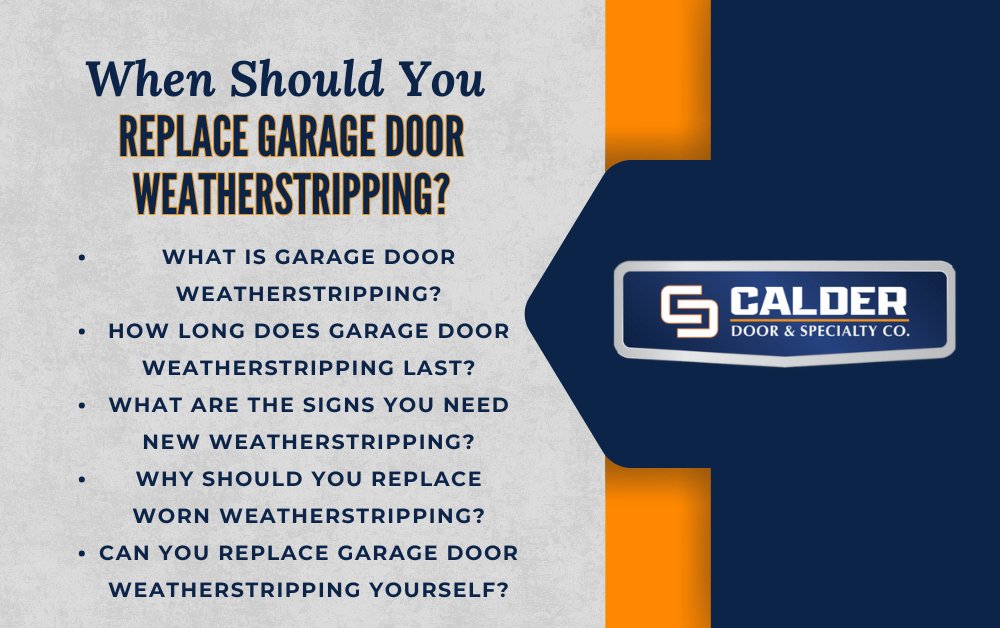
What Is Garage Door Weatherstripping?
Garage door weatherstripping is the flexible material that seals the small gaps between your garage door and the surrounding frame. It creates a barrier that helps prevent rain, snow, drafts, dirt, leaves, and pests from entering the garage when the door is closed.
Most garage doors use several types of weatherstripping to create a complete seal. The bottom seal runs along the lower edge of the door and presses against the garage floor. Additional seals along the sides and top close the spaces between the door and its frame. Together, these components help protect your garage from changing outdoor conditions and make it easier to maintain a comfortable temperature inside.
Because weatherstripping faces frequent movement, moisture, sunlight, and temperature changes, it gradually wears down. Regular inspections can help you identify damage before small gaps lead to water intrusion, pest activity, or noticeable drafts.
How Long Does Garage Door Weatherstripping Last?
Garage door weatherstripping does not have one set replacement schedule. Its lifespan depends on the material, the quality of the installation, how frequently the garage door operates, and how much exposure the seal receives from sunlight, moisture, and changing temperatures. A seal installed on a heavily used garage door may wear out faster than one on a door that opens only occasionally.
Lancaster County’s seasonal weather can also shorten the lifespan of weatherstripping. Summer heat can cause some materials to dry out, while freezing winter temperatures can make rubber or vinyl stiff and brittle. Repeated exposure may eventually cause the seal to crack, shrink, flatten, or pull away from the door.
Rather than replacing weatherstripping based only on its age, inspect it at least twice a year, ideally before winter and after the cold season ends. If the material remains flexible and creates an even seal around the closed door, it may still be effective. Visible damage or gaps, however, usually indicate that it is time for a replacement.
What Are the Signs You Need New Garage Door Weatherstripping?
Worn garage door weatherstripping can allow outdoor conditions to affect your garage long before the seal completely falls apart. Watch for these common signs that it may be time for a replacement.
Visible Cracks or Damage
Inspect the weatherstripping for cracks, splits, peeling edges, flattened areas, or missing sections. Rubber or vinyl that feels hard and brittle may no longer compress properly against the floor or frame.
Light Around the Closed Door
Close the garage door during the day and look for light around its edges. Visible daylight beneath the door or along the sides often reveals gaps where the weatherstripping no longer provides a complete seal.
Water or Debris Inside the Garage
Puddles, dirt, leaves, or snow near a closed garage door can indicate a worn seal. Replacing damaged garage door weatherstripping can help keep these outdoor elements from entering.
Drafts and Temperature Changes
Stand near the closed door and check for moving air. Noticeable drafts or uncomfortable temperature changes may mean outdoor air is passing through gaps around the door.
Signs of Pest Activity
Insects and small pests can enter through surprisingly narrow openings. If you notice increased pest activity near the garage door, inspect the weatherstripping for gaps, lifted sections, or damage.
Why Should You Replace Worn Garage Door Weatherstripping?
Damaged weatherstripping does more than create an unattractive gap around the door. Once the seal starts cracking, shrinking, or separating, it can expose your garage and anything stored inside to changing weather conditions, moisture, debris, and pests.
Replacing worn weatherstripping can provide several practical benefits:
- Blocks moisture: A secure seal helps prevent rain, melting snow, and runoff from entering beneath the garage door.
- Reduces drafts: New weatherstripping limits the amount of hot or cold outdoor air moving into the garage.
- Keeps out debris: A tighter seal makes it harder for wind to carry dirt, dust, and leaves inside.
- Limits pest entry: Closing small gaps can help prevent insects and other pests from entering the garage.
- Protects stored belongings: Reducing exposure to moisture and outdoor conditions helps protect tools, equipment, boxes, and other stored items.
- Supports energy efficiency: Proper garage door weatherstripping can help maintain a more consistent temperature, especially when the garage connects to the home.
Replacing a failing seal early can also help prevent small problems from becoming ongoing frustrations. If new weatherstripping does not close the gaps, the garage door may need an adjustment or professional inspection.
Can You Replace Garage Door Weatherstripping Yourself?
Some homeowners can replace basic garage door weatherstripping themselves, especially when the old bottom seal slides into a simple retainer. However, the replacement material must match the garage door’s size, seal profile, and retainer system. Choosing the wrong type can leave gaps even after installation.
Before starting, inspect the door and the area around it carefully. A damaged retainer, uneven garage floor, or misaligned door can prevent new weatherstripping from creating a proper seal. In these situations, replacing the material alone may not solve the problem.
Professional service may be the better choice if the old seal is difficult to remove, the retainer appears bent or rusted, or the door does not close evenly. A garage door technician can identify the source of the gap and determine whether the weatherstripping, door alignment, or another component needs attention.
When Should You Call a Garage Door Professional?
Call a professional if new garage door weatherstripping does not create an even seal or the door appears crooked. A technician can also help when the bottom retainer is damaged, water continues entering the garage, or gaps remain around the closed door. These issues may indicate that the door needs an adjustment or repair rather than weatherstripping alone.
Keep Your Garage Properly Sealed
Inspecting your garage door weatherstripping regularly can help you catch cracks, gaps, and other damage before moisture, drafts, debris, or pests enter your garage. Replacing a worn seal can improve protection and help maintain a more comfortable indoor temperature.
If your weatherstripping needs replacement or your garage door no longer closes evenly, contact Calder Door & Specialty Co. for professional garage door service in Lancaster County. Our experienced technicians can identify the problem and help restore a secure, reliable seal.