
A strong and secure doorway begins with a stable frame, and recognizing the earliest signs of damage is essential for maintaining long-term structural integrity. Many homeowners overlook subtle changes until issues grow larger, making timely inspection even more important. When you start noticing cracking, sticking, gaps, or malfunctioning hardware, it often indicates the need for prompt door frame repair. Calder Door offers reliable expertise that helps restore both function and safety before more serious problems develop. Taking action early ensures your home remains efficient, protected, and visually appealing.
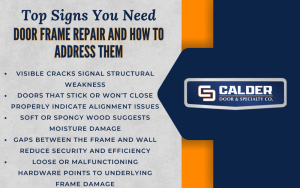
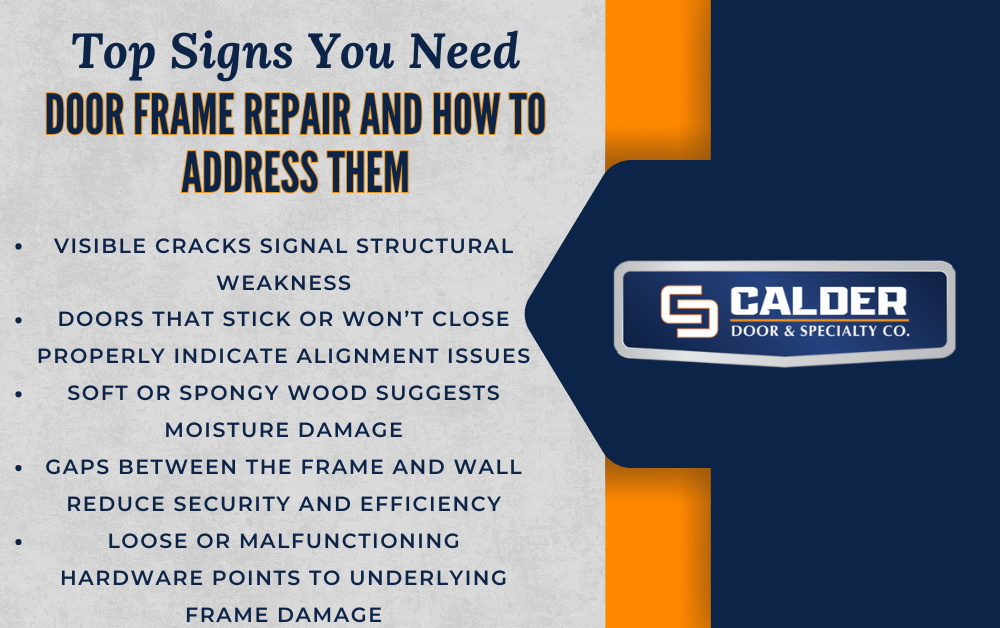
Visible Cracks Signal Structural Weakness
Understanding the Cause of Cracks
Cracks along the door frame often stem from shifting within the home’s structure, impact damage, or gradual deterioration caused by aging materials. These cracks may start small, but they tend to widen as the frame becomes weaker or separates from nearby surfaces. Many homeowners miss these early signs, allowing the problem to grow more complicated over time. Recognizing the causes of these cracks is essential because it helps determine the appropriate repair approach. Understanding these factors enables you to protect your home from further instability.
How Cracks Affect Your Home
Visible cracks may appear harmless, but they may expose the space to airflow, pest activity, and moisture buildup inside the home, creating more serious issues down the line. Over time, these cracks widen and compromise the frame’s structural strength, making your doorway less secure. When moisture infiltrates the cracks, it can contribute to rot and additional deterioration. Poor insulation around the frame may drive up energy costs and reduce indoor comfort. Addressing these issues early supports long-term efficiency and safety.
Practical Solutions for Cracked Frames
Small cracks can often be repaired with durable wood filler or epoxy, restoring the frame’s strength and appearance. However, larger or deeper cracks may require reinforcement or partial replacement to prevent the damage from progressing. Identifying the severity of the issue is essential for choosing the correct repair method. A thorough inspection ensures the full extent of the damage is addressed so the same problem does not return. Repairing cracks early prevents more serious structural issues and extends the lifespan of your door frame.
Doors That Stick or Won’t Close Properly Indicate Alignment Issues
Why Doors Begin to Stick
Doors commonly begin to stick when the frame shifts, warps, or expands due to seasonal changes in humidity or temperature fluctuations. Foundation settling can also cause misalignment that becomes more noticeable over time. As the frame moves out of position, the door no longer fits smoothly within its opening. This creates operational issues that disrupt daily use and place unnecessary stress on the hardware. When these symptoms appear, it is often a clear sign that door frame repair is needed.
The Impact of Poor Alignment
A door that fails to close easily or requires force to latch puts added strain on hinges and locking mechanisms. This ongoing pressure can eventually warp the frame even more, creating a cycle of increasing damage. Poor alignment often leads to cracked trim, uneven gaps, and weakened structural connections. In addition, the door may become less secure if the lock does not engage properly. Correcting alignment early helps preserve the frame and ensures long-term stability.
Restoring Smooth, Secure Operation
Realigning hinges, sanding swollen areas, or adjusting shims are effective ways to correct sticking doors. These adjustments allow the door to sit correctly within the frame and operate smoothly without friction. Once alignment is restored, the hardware experiences less wear and tear, which improves durability. Timely repairs also prevent future problems caused by ongoing pressure or misalignment. Ensuring proper operation supports both security and overall comfort.
Soft or Spongy Wood Suggests Moisture Damage
Recognizing Wood Rot
Soft, spongy, or crumbling wood around the door frame is a strong indicator of moisture infiltration and rot. This issue commonly develops due to leaks, poor sealing, or prolonged exposure to humid conditions. Wood rot progresses quickly and can compromise the stability of the entire doorway causing need for door frame repair. Many homeowners overlook the early signs, allowing the damage to spread deeper into the frame. Detecting rot early is essential for preventing costly structural repairs.
How Moisture Compromises the Frame
When moisture penetrates the frame, it weakens the wood fibers, making the frame unable to properly support the door’s weight. As the damage spreads, the door may begin to sag or stick, creating additional operational difficulties. Rot also causes the frame to become brittle, making cracks and holes more likely to form. If left untended, moisture damage can encourage mold growth and poor indoor air quality. Preventing these issues requires prompt and thorough repair.
Repairing and Preventing Moisture Damage
Repairing moisture-damaged frames usually involves cutting out the rotted wood and replacing it with fresh, treated material or durable composite inserts. These replacements help restore strength and prevent the damage from returning. Once repairs are complete, sealing and painting the frame offers an essential layer of protection. Regular maintenance and inspections help identify moisture-related issues before they worsen. Preventive care keeps the frame strong and reliable for years to come.
Gaps Between the Frame and Wall Reduce Security and Efficiency
Why Gaps Develop
Gaps along the frame often occur due to foundation settling, improper installation, or long-term material shifting. Over time, these spaces widen and become more noticeable, especially in changing weather conditions. While they may appear minor at first, gaps indicate that the frame is no longer securely fastened to the wall. This instability can affect the door’s alignment and function. Recognizing gaps early helps prevent more significant structural issues.
The Problems Gaps Create
Gaps allow air infiltration, reducing energy efficiency and hindering the home’s ability to stay warm in winter and cool in summer. These openings also allow noise, dust, and insects to enter the house more easily. Even small gaps in need of door frame repair can pose security risks by weakening the door’s overall structure. As the gap widens, it becomes easier for the frame to shift or loosen further. Addressing gaps promptly helps protect both comfort and safety.
Effective Fixes for Frame Gaps
Repairing gaps typically involves reinforcing the frame with additional fasteners or insulation to restore a snug fit. In more severe cases, sections of the frame may need to be adjusted or reinstalled for proper alignment. Ensuring the frame fits tightly improves stability, energy performance, and overall security. Adequate sealing also prevents drafts and maintains interior comfort year-round. Fixing these issues early strengthens the frame and enhances the door’s performance.
Loose or Malfunctioning Hardware Points to Underlying Frame Damage
Why Hardware Starts to Loosen
Loose hinges, strike plates, or locks often indicate that the wood behind the hardware is deteriorating or shifting. Over time, screws lose their grip as the frame weakens or becomes misaligned. This gradually reduces the hardware’s effectiveness and stability. Frequent use can worsen the problem by pulling the compromised wood further. These early signs suggest that door frame repair may be needed to address the underlying issue.
The Risks of Ignoring Hardware Issues
When hardware becomes loose, the door may not latch properly, leaving your home vulnerable to security risks. Continued strain on weakened screws or wood can cause the door to sag, making it harder to open or close. Malfunctioning locks can compromise your family’s safety and create ongoing frustrations. If left unaddressed, the damage can spread to the door itself. Taking action early helps restore confidence and structural reliability.
Restoring Secure, Reliable Hardware Support
Repair solutions may include reinforcing the wood with stronger backing materials or replacing damaged sections entirely. Upgrading to high-quality hardware can improve long-term durability and performance. When the frame is restored, the hardware regains its stability and functions more reliably. A secure and well-aligned frame supports smooth daily use and long-lasting protection. Addressing hardware issues promptly extends the life of your entire doorway system.
Conclusion
Identifying the early signs of frame damage helps homeowners prevent costly repairs, maintain security, and ensure long-term structural integrity. Whether you’re dealing with cracks, alignment problems, moisture damage, gaps, or loose hardware, timely door frame repair keeps your home safe and efficient. Proper repairs restore both strength and function, allowing your doorway to perform as intended. Calder Door offers dependable solutions that help homeowners protect their entryways with confidence. If you’re noticing any of these warning signs, reach out today for expert assistance and take the first step toward a stronger, safer home. Call Calder Door today for fast, reliable solutions you can trust.