

Few things are more irritating than the constant noise of squeaking doors in your home or office. This persistent sound can disrupt concentration and create frustration for anyone living or working in the space. Beyond being a nuisance, squeaks may indicate underlying maintenance issues that could worsen over time if ignored. At Calder Doors, we understand how creaky hinges and misaligned doors impact comfort and functionality. Addressing these problems promptly can restore smooth, silent operation while extending the life of your doors. Understanding the causes and solutions for squeaking doors helps property owners maintain both peace of mind and door performance.
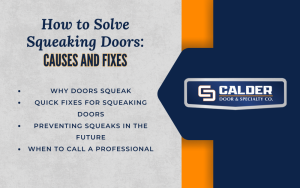
Why Doors Squeak
Worn or Dry Hinges
One of the most common causes of squeaking doors is dry or worn hinges. Metal hinges generate friction over time, which creates that annoying creaking noise when a door moves. Accumulated dust and residue can settle in the hinge mechanism, worsening the problem. Regular lubrication or timely replacement of old hinges often solves the issue quickly. By addressing wear and tear early, homeowners prevent minor annoyances from turning into costly repairs. Smooth, well-maintained hinges restore quiet, reliable door operation for years to come.
Misalignment or Loose Hardware
Squeaking doors can also be caused by misaligned hinges or loose screws. Even a slightly uneven door can create extra friction against the frame, producing creaks during normal movement. Checking the hardware for loose screws and tightening them can often resolve the problem. In more persistent cases, adjusting the hinge placement or door alignment may be necessary. Professional locksmiths or door technicians can ensure proper installation and prevent the issue from recurring. Correct alignment keeps doors functioning efficiently while minimizing noise.
Environmental Factors
Temperature and humidity changes often affect squeaking doors. Wooden doors, in particular, expand and contract as environmental conditions shift, placing pressure on hinges and frames. This movement can create rubbing points that lead to creaks and groans. Seasonal maintenance and adjustments help keep doors operating smoothly throughout the year. Understanding the impact of environmental factors ensures your doors remain functional and quiet. Preventive care protects your doors from long-term damage caused by shifting climates.
Quick Fixes for Squeaking Doors
Lubricate Hinges
One of the simplest and most effective ways to address squeaking doors is to lubricate the hinges. Options include WD-40, silicone spray, or specialized hinge grease, each designed to reduce friction. Apply a small amount to the hinge pins and gently move the door back and forth to work the lubricant in. This process often eliminates the squeak instantly while restoring smooth motion. Regular lubrication prevents the problem from returning and keeps doors functioning properly. Incorporating this into routine maintenance ensures long-term performance.
Tighten or Replace Hardware
Loose screws or worn hinges are frequent contributors to squeaking doors. Inspecting the door’s hardware and tightening screws can solve minor issues quickly. For older or damaged hinges, replacement may be necessary to restore quiet operation. Upgrading to high-quality components not only stops noise but also improves overall durability. Properly secured hardware ensures that doors remain functional and silent. Taking care of these minor adjustments protects doors from unnecessary wear and tear.
Adjust Door Alignment
Misaligned doors often rub against frames or flooring, causing squeaking doors. Minor adjustments to hinge placement or door height can eliminate friction points. For ongoing problems, professional services can realign doors and prevent long-term damage. Correct alignment ensures smooth operation, reducing wear on hinges, frames, and the door itself. Properly aligned doors also improve security and overall usability. Addressing alignment proactively prevents future maintenance headaches.
Preventing Squeaks in the Future
Regular Maintenance
Routine inspections help prevent squeaking doors from developing. Cleaning hinges, checking for loose hardware, and applying lubricant periodically are simple yet effective steps. These small tasks maintain both functionality and quiet operation. Regular maintenance also extends the lifespan of doors and their components. Staying proactive reduces the likelihood of emergency repairs or replacements. Consistent care ensures doors operate efficiently for years.
Choose Quality Hardware
Installing durable hinges, screws, and door components minimizes friction and wear. High-quality materials are less prone to rust or deformation, which can create squeaking doors. Durable hardware handles frequent use more effectively and requires less maintenance over time. Upgrading to quality components enhances both the appearance and performance of doors. Investing in reliable materials prevents recurring noise problems and improves overall door longevity. Strong, durable hardware supports smooth operation and peace of mind.
Control Humidity Levels
Environmental conditions play a significant role in squeaking doors. Maintaining consistent humidity and temperature levels reduces expansion and contraction in wooden doors. This prevents extra pressure on hinges and rubbing against the frame. Using dehumidifiers or proper ventilation can stabilize indoor conditions. Controlling humidity also protects doors from warping and other damage. Stable conditions help maintain quiet, well-functioning doors year-round.
When to Call a Professional
Persistent Squeaks
If lubrication or minor adjustments do not stop the noise, there may be a deeper issue causing squeaking doors. Professional locksmiths or door technicians can inspect hinges, alignment, and frames for underlying problems. They provide solutions that ensure long-term reliability rather than temporary fixes. Experts also identify worn components that may need replacement. Calling a professional avoids recurring maintenance and restores smooth operation. Trained technicians keep doors functioning silently and efficiently.
Replacing Worn Components
Over time, hinges, screws, or door frames may wear out, causing persistent squeaking doors. Professionals can replace these components with durable, high-quality alternatives. Proper installation ensures that doors function quietly and efficiently. Replacing worn parts also prevents additional stress on the door or frame. This investment in maintenance protects doors from premature wear and failure. Professional replacements improve both functionality and the lifespan of your doors.
Safety and Efficiency
Professional locksmith or door services not only fix squeaking doors but also ensure overall safety and efficiency. Properly aligned and maintained doors reduce the risk of accidents or damage. Smooth operation prevents unexpected jams or lock issues. Professionals also optimize door performance for both everyday convenience and long-term durability. A fully serviced door system improves home comfort and security. Expert attention guarantees doors remain safe, reliable, and silent.
Conclusion
Squeaking doors may seem minor, but they can indicate deeper maintenance issues that affect durability and comfort. Most problems are caused by worn hinges, loose hardware, or environmental factors, all of which are fixable with proper care. Routine lubrication, timely adjustments, and quality components prevent recurring noise and extend door life. Professional services ensure long-term reliability and address complex issues efficiently. At Calder Doors, we provide expert solutions to restore smooth, silent operation and maintain optimal door performance.
Contact Calder Doors today to fix your squeaking doors and enjoy quieter, more reliable operation throughout your home or office.